
Circumferential Lipectomy (Body Lift) in Melbourne
Understanding Your Options
Losing a significant amount of weight is a real achievement. Afterwards, many people find excess, deflated skin over much of the body, which can affect comfort and how they feel in their clothes.
Abdominoplasty addresses loose skin at the front of the abdomen, but does little for the back, upper thighs and flanks. In some people, treating the front alone can make the remaining areas more noticeable.
Dr Richard Ross, Specialist Plastic and Reconstructive Surgeon, performs circumferential lipectomy in Melbourne. He looks at your whole trunk, front and back, before recommending a plan.
Common Reasons Patients Consider Circumferential Lipectomy
- Excess skin around the whole lower trunk after significant weight loss
- Loose skin on the back and flanks as well as the abdomen
- Buttocks and thighs that sit lower after weight loss
A consultation is the right step to understand which of these apply to you, and whether surgery is likely to help.
What the Circumferential Lipectomy Procedure Involves
Circumferential lipectomy combines an abdominoplasty with removal of excess tissue from the flanks and back. It also lifts the buttocks, flanks and thighs into a higher position. As surgery is needed on both the front and back of the body, you'll be turned during surgery while under anaesthetic.
Circumferential Lipectomy
Removes excess skin from the lower back, flanks and abdomen in one operation.
Liposuction Refinement
Liposuction is often used to fine-tune contour.
Combined Procedures
Other procedures may be combined during the same anaesthetic.
Each option suits different needs. Dr Richard will explain which he recommends for you, and why.
Preparing for Circumferential Lipectomy
Your consultation starts with understanding your weight loss journey, your health and your goals. Dr Richard will examine your trunk, front and back, along with any other areas of concern.
Considering if Circumferential Lipectomy is for You?
Choosing a body lift is a very personal decision. It's worth considering whether the potential benefits match your aims, and whether the risks are acceptable to you.
Circumferential lipectomy may suit you if excess skin around your trunk affects your comfort or how you feel after significant weight loss. It's a major operation, so realistic expectations about what surgery can and can't offer are important. Over time, gravity will allow some relaxation of the final shape.
Dr Richard will talk with you about your reasons, examine you and explain whether a body lift is likely to help.
During Surgery
Circumferential lipectomy is performed under general anaesthetic, and may be combined with other procedures. Once all safety checks are complete, excess skin is removed from the lower back or flanks. You're then turned onto your back so excess abdominal tissue can be removed.
Liposuction is often used to fine-tune the result. The incision is closed along the lower back, flanks and lower abdomen, where it is least noticeable. Compression garments are fitted before you wake. Drains are used occasionally to remove fluid over the first few days.
Given the extent of tissue removed, surgery can take four to eight hours. Timings vary from person to person, and every operation follows the plan you and Dr Richard agree on beforehand.
Recovery
Dr Richard recommends staying in hospital for at least one to two nights. Expect swelling and a considerable degree of tightness in the abdomen and back. Your anaesthetist will help manage pain relief, and you'll be encouraged to walk the day after surgery.
Key points during recovery:
- Move around the house and keep to light daily activities in the first week
- Wear your surgical garment full time for the first two weeks
- Avoid lifting, pulling or straining for the first month
- Wait six weeks before jogging or sit-ups
Most people return to office work after around two weeks. Some numbness around the incision is expected and becomes less noticeable over time. Your shape settles, and scars begin to mature, over the following six months. After weight loss, scars may stretch or move over time.
Dr Richard and our experienced nursing team will let you know when your follow-up appointments are and what to expect at each stage of your recovery.
Risks and Considerations
All surgery carries risks. The decision to have circumferential lipectomy should be made after weighing whether the potential benefits meet your aims and whether the risks are acceptable to you. Risks include, but are not limited to, the following.
- Heart problems, including heart attack or irregular heartbeat
- Blood clots in the legs or lungs, which may be fatal
- Infection at the surgical site
- Bleeding or fluid collection needing a return to theatre
- Wound breakdown, delayed healing or protruding stitches
- Visible, raised, stretched or moved scars
- Dissatisfaction with the degree of tightening
- Hernia or abdominal bulge
- Loss of the belly button tissue
- Asymmetry, nerve injury or compression injury to a nerve
- The possible need for revision surgery
Dr Richard will only consider revision surgery if there's a clear structural problem that can realistically be improved, and the risk of a worse result is minimal.
You're welcome to ask Dr Richard anything at your consultation, so you can make a decision that feels right for you.
Results vary from person to person. Any surgical or invasive procedure carries risks. Before proceeding, you should seek a second opinion from an appropriately qualified health practitioner.
Before & After Gallery
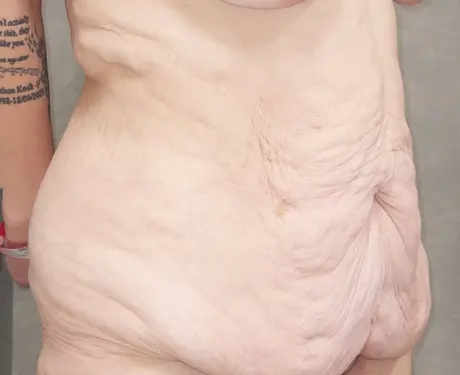
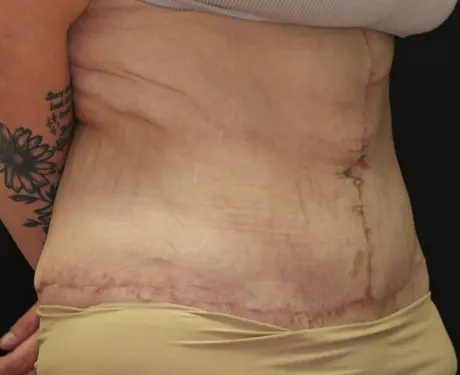
Case 2: Fleur-de-Lys abdominoplasty, 360 body lift and bilateral thighplasty
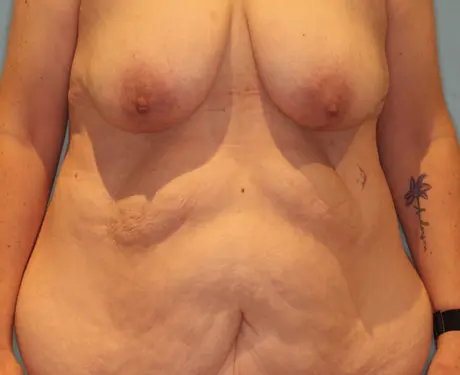
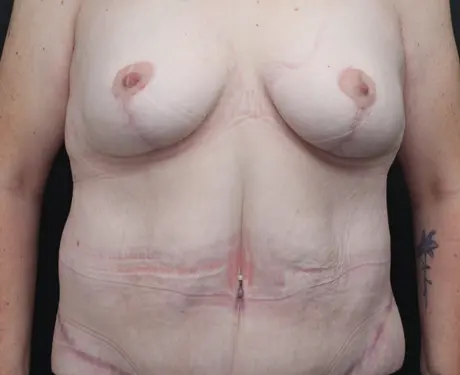
Case 1: 360 body lift and bilateral mastopexy
Case 2: Fleur-de-Lys abdominoplasty, 360 body lift and bilateral thighplasty
Case 1: 360 body lift and bilateral mastopexy
Results vary from person to person. Any surgical or invasive procedure carries risks. Before proceeding, you should seek a second opinion from an appropriately qualified health practitioner.

Let’s Begin with What Matters to You
You don't need to have it all figured out. Tell us what's on your mind, and we'll help you take the next step at your own pace.
Frequently Asked Questions
Circumferential lipectomy, or 360-degree body lift, combines several procedures to address excess skin around the entire lower trunk. Dr Richard Ross performs it in Melbourne, most often for people who have lost significant weight. Dr Richard will talk you through whether it suits you at your consultation.
An abdominoplasty treats the front of the abdomen only. A circumferential lipectomy also treats the flanks and back, and lifts the buttocks and thighs. Dr Richard will explain which is more likely to suit you, so you can make an informed decision.
Circumferential lipectomy usually takes four to eight hours, given the extent of tissue removed. Timing varies from person to person and with any combined procedures. Dr Richard will give you a guide for your surgery.
Dr Richard recommends staying in hospital for at least one to two nights after circumferential lipectomy. Every condition is different, so Dr Richard and our experienced nursing team will guide you through each stage of your recovery.
Most people return to office work after around two weeks. You'll need to avoid lifting or straining for a month, and wait six weeks before jogging or sit-ups.
Yes. After significant weight loss, scars may stretch or move over time as tension settles and the skin stretches. Dr Richard will talk this through with you, so you know what to expect before you decide.
Some numbness around the incision is expected and becomes less noticeable over time. Your shape settles, and scars begin to mature, over the following six months. Dr Richard and our experienced nursing team will guide you through each stage.